


Body Acne: Causes, Types, and How to Treat
July 11, 2026
By: Truly Beauty
Discover how to get rid of body acne and what causes it in the first place.
Body acne isn't poor hygiene. It's a complex skin condition influenced by oil production, clogged pores, hormones, bacteria, genetics, and environmental factors.
Understanding what causes body acne and how it develops is the first step toward treating it effectively.
What Is Body Acne?
Body acne is a form of acne vulgaris that occurs on different areas of the body. It develops when hair follicles become blocked by a combination of excess oil, dead skin cells, bacteria, and inflammation.
Every hair follicle contains a sebaceous gland that produces sebum, a natural oil that helps keep the skin moisturised and protected. However, when the body produces too much oil, or when dead skin cells do not shed properly, these substances can build up inside the pores. Once a pore becomes blocked, bacteria that naturally live on the skin can multiply and trigger an inflammatory response, leading to acne.
Where Does Body Acne Usually Appear?
Body acne can develop anywhere that contains hair follicles and oil glands, but certain areas are more commonly affected.
Back Acne
Back acne, often called “bacne,” can range from mild blackheads and small bumps to painful cystic breakouts. It's one of the most common places for body acne because it contains a large number of sebaceous glands. This makes the area more prone to excess oil production and clogged pores.
Chest Acne
The chest is another common area where body acne develops. The chest can become exposed to sweat, heat, friction from clothing, and products such as moisturisers, sunscreen, or body oils.
Chest acne may appear as small bumps, whiteheads, or inflamed pimples. Some people experience occasional breakouts, while others develop recurring acne that requires a more targeted skincare routine.
Shoulder and Arm Acne
The shoulders and upper arms are also common areas for body acne. These breakouts are often linked to friction from clothing straps, sports equipment, or bags. Some people may also experience small, rough bumps on the upper arms that are not actually acne but a condition called keratosis pilaris, which occurs when keratin builds up around hair follicles.
What Causes Body Acne?
Body acne is typically caused by a combination of dead skin cells, excess sebum (oil), and bacteria getting trapped inside the hair follicles. This process is frequently aggravated by external triggers such as sweat and trapped moisture from workouts, friction and occlusion from tight clothing (acne mechanica), hormonal fluctuations that spike oil production, and pore-clogging residue from hair products running down the body in the shower.
Is Body Acne Different From Facial Acne?
Body acne and facial acne develop through similar biological processes, but there are important differences between them.
The skin on the body is generally thicker than facial skin, which means clogged pores can sometimes become deeper and more difficult to treat. Body acne is also more affected by external factors such as clothing, sweat, pressure, and friction.
For example, someone may maintain a good facial skincare routine but still experience back acne because their breakouts are being triggered by workout habits, hair products, or clothing choices.
How to Treat Body Acne
Clearing body acne requires a targeted, consistent routine that unclogs pores, targets blemish-causing bacteria, and repairs your skin barrier without causing irritation. Follow this complete step-by-step routine to banish breakouts from neck to toe:
Step 1: Upgrade Your Shower Routine
The way you shower matters immensely when it comes to body breakouts.
- Wash your body last: Always rinse out your shampoo and conditioner completely before washing your torso and back. Hair products often contain heavy silicones and oils that leave a pore-clogging film on the skin if they aren't thoroughly washed away.
- Switch to a clarifying wash: Swap out standard, overly fragranced bar soaps for a body wash formulated with Salicylic Acid (BHA) or Glycolic Acid (AHA). Salicylic acid is oil-soluble, meaning it can dive deep inside the pore lining to dissolve trapped sebum and dead skin cells.
Step 2: Incorporate a Targeted Body Treatment
Just like you use serums for your face, your body needs active treatments to fade post-blemish marks and stop active breakouts in their tracks.
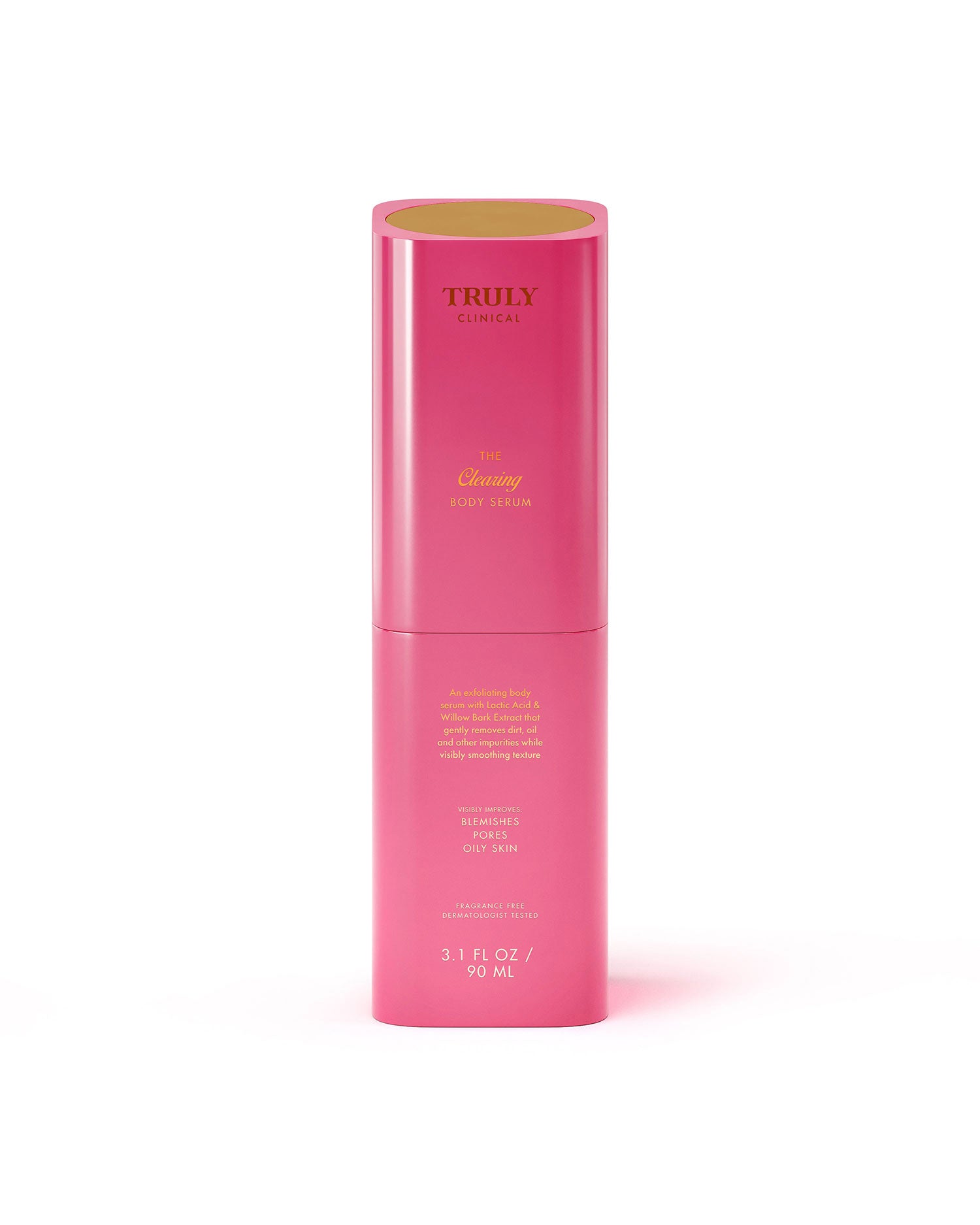
- Apply a clearing serum: While your skin is still slightly damp post-shower, apply a lightweight treatment like Truly The Clearing Body Serum. Powered by clarifying ingredients like lactic acid and willow bark extract, it gently exfoliates, calms redness, and smooths uneven skin texture instantly without feeling sticky under clothes.
Step 3: Manage Sweat and Friction Instantly
Sweat and tight clothes are the ultimate recipe for body acne flare-ups (acne mechanica).
- Shower immediately after working out: Never let sweat sit on your skin for hours. If you can't shower right away, use a gentle cleansing wipe on your chest and back.
- Wear breathable fabrics: Opt for loose-fitting, moisture-wicking natural fabrics like cotton during workouts and hot summer months to let your skin breathe.
Expert Tip: Consistency is key! Body skin turns over more slowly than facial skin, so give any new routine at least 4 to 6 weeks of daily dedication before expecting completely clear results.
How to Prevent Body Acne
Preventing body acne is often about reducing the factors that encourage clogged pores and irritation.
Simple changes can make a noticeable difference. Showering after sweating, wearing clean breathable clothing, changing bedsheets regularly, rinsing hair products away thoroughly, and avoiding products that clog pores can help maintain healthier skin.
Consistency is more important than using many different products. A simple routine that you follow regularly is usually more effective than constantly changing treatments.
Read next: How to Fade Body Acne Scars
Body Acne vs. Strawberry Legs
If you notice small bumps or dark spots on your legs, you may wonder whether you’re dealing with strawberry legs or body acne. Although they can look similar, they have different causes. Body acne develops when hair follicles become clogged with oil, dead skin cells, and bacteria, while strawberry legs typically appear as small dark or red dots around the hair follicles, often after shaving or hair removal.
When Should You See a Dermatologist?
Mild body acne can often improve with over-the-counter treatments and lifestyle adjustments. However, professional advice may be helpful if your acne is painful, widespread, leaving scars, or not improving after several months of consistent care.
A dermatologist can identify the type and severity of your acne and recommend treatments that may include prescription creams, medications, or professional procedures.
Frequently Asked Questions About Body Acne
Why do I suddenly have body acne?
Sudden body acne can happen because of hormonal changes, stress, new skincare products, increased sweating, lifestyle changes, or changes in medication. Sometimes several factors combine to trigger new breakouts.
Does poor hygiene cause body acne?
No. Body acne is not simply caused by being dirty. While sweat and buildup can contribute to clogged pores, acne is mainly caused by a combination of oil production, dead skin cells, bacteria, inflammation, and genetics.
How long does body acne take to clear?
Most acne treatments require several weeks before noticeable improvement occurs. Consistency is important because acne develops gradually beneath the skin.
Can body acne be permanently cured?
Acne can often be controlled successfully, but some people may experience recurring breakouts due to hormones, genetics, or environmental triggers. Maintaining a suitable skincare routine can help prevent future flare-ups.
Share


In this article
-
 Body Acne: Causes, Types, and How to Treat
-
What Is Body Acne?
-
Where Does Body Acne Usually Appear?
-
What Causes Body Acne?
-
Is Body Acne Different From Facial Acne?
-
How to Treat Body Acne
-
How to Prevent Body Acne
-
Body Acne vs. Strawberry Legs
-
When Should You See a Dermatologist?
-
Frequently Asked Questions About Body Acne

Share
The Latest Blogs


You Might Also Like


FREE
SHIPPING

EASY
RETURNS

MONEY BACK
GUARANTEE

SECURE
CHECKOUT


